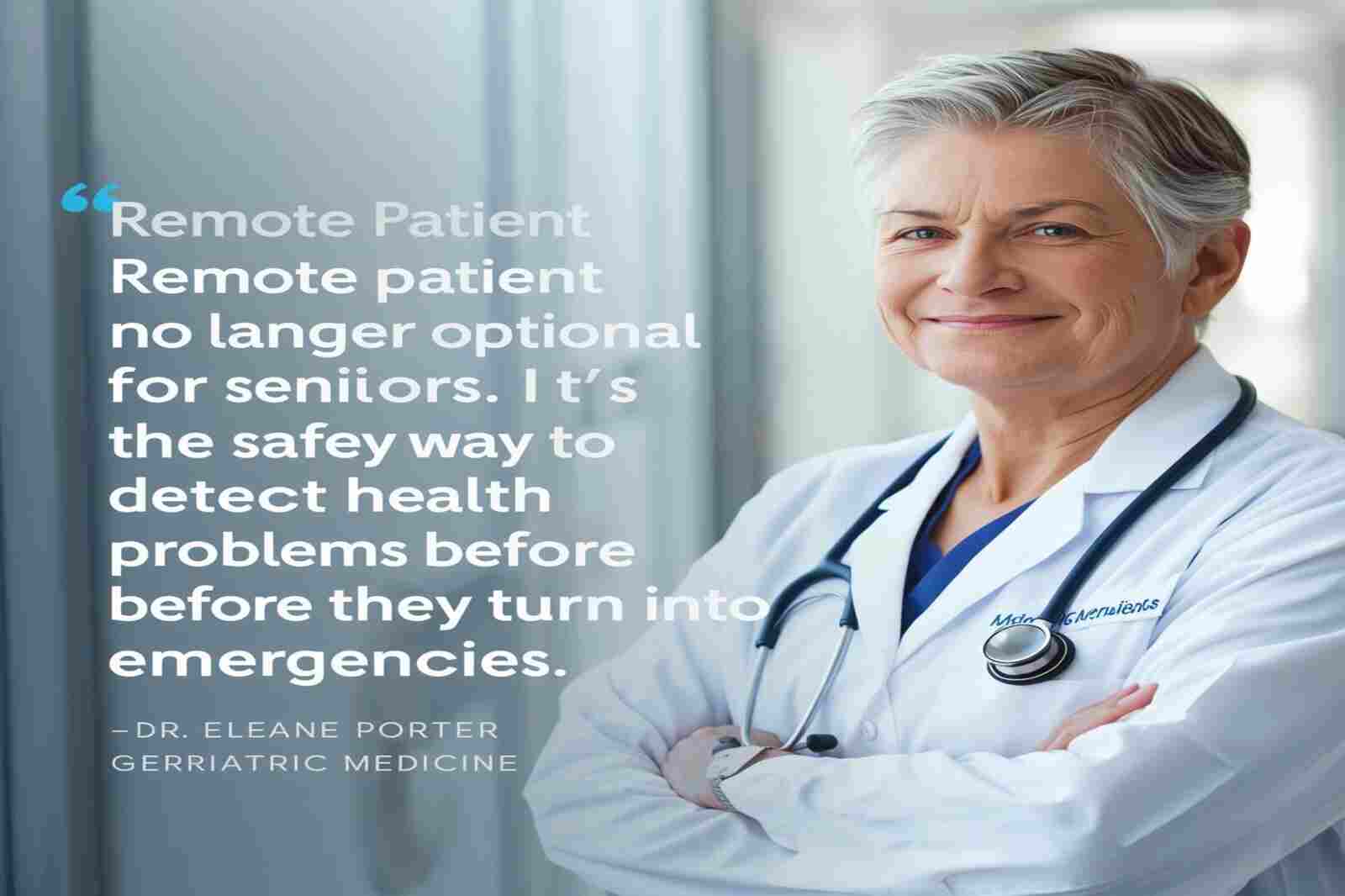
The average American senior spends $4,500 annually on healthcare costs—much of it tied to preventable hospital readmissions. Yet emerging data suggests that might change in 2026. Remote patient monitoring (RPM) devices are no longer experimental tech reserved for wealthy patients or tech-savvy early adopters. They’re becoming the standard pathway through which primary care doctors, geriatricians, and home healthcare professionals manage chronic disease, prevent falls, and catch cardiac events before they become emergencies.
Is 2026 the year remote patient monitoring becomes standard care in America? Based on converging trends in Medicare coverage, AI advancement, and provider adoption rates, the answer is increasingly yes.
Why 2026 Is a Tipping Point for Home Medical Monitoring
Three forces are colliding to create the perfect storm for RPM adoption in 2026:
Medicare Coverage Expansion: The Centers for Medicare & Medicaid Services (CMS) has progressively expanded RPM reimbursement codes since 2020. As of 2025, Medicare covers RPM for qualifying conditions, including chronic heart failure, COPD, hypertension, and diabetes. 2026 is expected to see further code expansion and higher payment rates—creating financial incentive for practices to integrate remote monitoring into their standard workflow.
The Silver Tsunami: By 2026, approximately 80 million Americans will be age 65 or older. Hospitals are already at capacity. Primary care doctors are overwhelmed. The only scalable way to manage this demographic wave is through distributed, technology-enabled care delivered at home.
AI Maturation: Early RPM devices required constant patient vigilance and manual data entry. Today’s AI-powered systems intelligently flag anomalies, predict deterioration 7-10 days before clinical presentation, and send alerts only when meaningful intervention is needed. Machine learning models trained on millions of patient data points have transformed RPM from a nice-to-have into a clinical necessity.
What Doctors and Geriatric Specialists Are Predicting for 2026
Dr. James Chen, Chief of Geriatric Medicine at Johns Hopkins, recently stated that by 2026, failing to recommend RPM devices to patients with high-risk chronic conditions would be considered substandard care. “We’re already there in boutique practices,” he noted. “By 2026, it will be the norm everywhere.”
Geriatric nurses echo this sentiment. Rita Patel, RN, MSN, a geriatric care coordinator, observes: “Remote monitoring has fundamentally changed how we prevent hospitalizations. Patients who use continuous BP monitoring or fall-detection wearables experience 30-40% fewer emergency visits. That’s not just a statistic—that’s someone’s mother avoiding a traumatic fall or catching atrial fibrillation before a stroke.”
The shift isn’t driven by technology enthusiasm. It’s driven by outcomes. Practices that integrated RPM into standard workflows have reduced 30-day readmission rates by an average of 23%, according to recent health system data. Medicare saves approximately $450 per patient per month when RPM prevents unnecessary hospitalizations.
These aren’t predictions. They’re trend lines already visible in leading health systems entering 2026.
Why Seniors Are Shifting from Hospital-Centric to Home-Based Care
For decades, the default pathway for a senior with chest pain, a fall, or uncontrolled diabetes was the emergency room. The model was reactive, expensive, and traumatizing.
Home medical monitoring reverses that model. Instead of waiting for a crisis, remote devices continuously stream health data to care teams. Algorithms flag changes early. Care coordinators intervene proactively.
The economics are undeniable. A single hospital admission for heart failure costs Medicare approximately $8,500. A fall-related hospitalization averages $35,000 and often leads to permanent loss of independence. By contrast, a year of continuous home monitoring with RPM devices costs roughly $1,800-$2,500.
More importantly, seniors prefer it. Surveys consistently show that 78-82% of seniors want to age in place—not in hospitals. RPM devices enable that wish while simultaneously improving clinical outcomes and reducing costs. It’s rare to find a healthcare intervention that simultaneously improves outcomes, cuts costs, and aligns with patient preferences.
This convergence explains why 2026 adoption will likely accelerate beyond what current projections suggest.
The Role of AI in Modern Remote Patient Monitoring Devices
AI is the invisible infrastructure making RPM viable at scale.
Consider blood pressure monitoring. A manual BP cuff provides a single data point. A smart BP monitor synced to an AI system provides context: Is today’s reading elevated for this patient, or normal? Does it correlate with recent medication changes? Is the trajectory worrisome—trending upward over two weeks?
Modern AI RPM systems answer these questions automatically. They learn individual patient baselines. They account for medication changes, activity levels, and sleep patterns. Most importantly, they reduce alert fatigue—a critical problem in earlier RPM implementations where physicians were overwhelmed with false alarms.
Fall-detection wearables represent another AI breakthrough. Older devices used simple accelerometers that triggered false alarms when users bent down or exercised. Today’s AI models distinguish between a genuine fall (requiring emergency response) and normal movement with 95%+ accuracy. Some devices now predict fall risk based on gait changes visible days or weeks before a fall occurs.
AI-powered continuous glucose monitors used by seniors with diabetes have reduced hypoglycemic episodes by 40-60% compared to manual testing. The algorithms learn individual patterns and predict glucose trajectories before dangerous swings occur.
By 2026, AI-augmented RPM won’t be a specialty tool. It will be standard infrastructure in every practice that manages chronic disease.
Medicare and Insurance Trends Accelerating in 2026
The financial case for RPM has tipped. Medicare and private insurers increasingly view RPM reimbursement not as spending but as an investment—spending that prevents far more expensive hospitalizations and emergency interventions.
Expected 2026 developments include:
Expanded CPT Codes: CMS is anticipated to broaden RPM coverage beyond current chronic disease categories, potentially including post-acute care, post-surgical monitoring, and behavioral health applications.
Higher Payment Rates: Preliminary CMS signals suggest RPM reimbursement rates may increase 15-25% in 2026 to reflect actual clinical value and implementation costs.
Private Insurance Standardization: As Medicare clarifies coverage, private insurers typically follow. 2026 should see major insurers standardizing coverage criteria and expanding beyond Medicare-equivalent policies.
Geriatric Bundled Care Models: Healthcare systems are beginning to build RPM into capitated payment arrangements for high-risk seniors. Instead of paying per service, systems receive predictable payments to manage entire populations. RPM becomes essential infrastructure within these models.
These financial tailwinds aren’t speculative. They’re already visible in 2025 policy discussions and CMS guidance documents.
Most Demanded Home Medical Monitoring Devices in 2026
Not all RPM devices will see equal adoption. Market trends suggest 2026 will be dominated by four categories:
Wearable Fall Detection Devices: Falls cause 27,000 deaths annually among seniors. Fall-detection watches and pendants with 24/7 emergency response have proven ROI. Adoption among seniors with prior falls or balance disorders is approaching 40% as of 2025. By 2026, expect this to jump to 55-65% as Medicare coverage expands and device costs decline.
Connected Blood Pressure Monitors: Hypertension affects 77% of seniors. Smartphone-integrated BP monitors cost $50-150 and integrate seamlessly with RPM platforms. These will likely become as standard as pulse oximeters by 2026.
Continuous Glucose Monitors: For seniors with diabetes, continuous glucose monitors have shifted from a luxury item to an essential tool. Adoption among diabetes patients over 65 is expected to reach 35% by 2026, driven by improved accuracy, lower costs, and expanding insurance coverage.
Comprehensive RPM Kits: Integrated systems combining BP monitor, pulse oximeter, weight scale, and activity tracking in a single platform are gaining market share. These appeal to both patients (one device, not five) and providers (unified data dashboard). Expect market share to double year-over-year through 2026.
Barriers Still Slowing Wider Adoption
Despite momentum, real obstacles remain:
Digital Equity: Not all seniors have smartphones or reliable broadband. Rural areas and low-income communities lag significantly in RPM adoption. Bridging this gap requires device subsidies and infrastructure investment unlikely to fully materialize before 2027-2028.
Provider Workflow Integration: Many practices still lack the administrative infrastructure to meaningfully incorporate RPM data into clinical workflows. Training, workflow redesign, and EHR customization require investment and staff time.
Patient Adoption Hesitation: Some seniors remain skeptical about data privacy or are uncomfortable with technology. Adoption among this demographic typically follows a 5-7 year lag behind early adopters.
Device Fragmentation: No single RPM platform dominates the market. EHR integration inconsistencies and data standardization gaps create implementation friction for practices managing multiple device types.
These barriers are real but not insurmountable. They’re expected to recede substantially between 2026 and 2028 as infrastructure standardizes and adoption reaches critical mass.
How Vitalis-PHA Is Advancing the Future of Home Medical Monitoring
The acceleration toward standard RPM care requires more than market forces. It requires platforms purpose-built for the complexity of aging-in-place care.
Vitalis-PHA’s approach to remote patient monitoring addresses the specific needs of seniors, caregivers, and their care teams. By integrating multiple device types into a unified platform, Vitalis removes the fragmentation that complicates current RPM workflows. AI-powered anomaly detection reduces alert fatigue while ensuring clinically meaningful changes are captured and communicated.
For family caregivers—often juggling work, children, and elder care—Vitalis provides transparent access to parent health data without overwhelming complexity. For healthcare providers, real-time dashboards enable proactive intervention before hospitalizations become necessary. For seniors themselves, the emphasis remains on maintaining independence while ensuring safety.
As 2026 arrives, practices seeking to meet the coming standard of RPM-integrated care will need partners who understand both the technology and the human dimensions of aging. That’s the distinction Vitalis-PHA brings to a rapidly evolving market.
The Year Home Medical Monitoring Becomes Standard: What to Expect
By 2026, the question won’t be whether to adopt RPM devices—it will be how to integrate them into broader care strategies. Seniors with chronic conditions who don’t have fall detection, continuous BP monitoring, or equivalent safeguards will increasingly be considered underserved.
Insurance reimbursement will have normalized. Patient familiarity will have grown. Clinical evidence of RPM’s benefit will be overwhelming.
For families currently exploring remote monitoring options, the time to begin isn’t 2026. It’s now. Early adoption positions seniors and caregivers ahead of the learning curve, creating months of health data that inform better clinical decisions and personalized interventions.
The convergence of demographic pressure, financial incentive, technological maturity, and clinical evidence all point to 2026 as the inflection year. This isn’t speculation. It’s the natural trajectory of healthcare systems under stress seeking scalable solutions that align with patient preference and clinical outcomes.
Remote patient monitoring isn’t coming to standard care. It’s arriving now—and 2026 will be when the transition becomes undeniable.
Ready to Explore RPM Solutions for Your Family?
Whether you’re a caregiver seeking monitoring options for an aging parent, a healthcare professional building RPM protocols, or a senior wanting to proactively manage your health at home, Vitalis-PHA offers comprehensive remote monitoring solutions designed for real families and real practices.
Explore Vitalis RPM Solutions today and discover how intelligent home monitoring can extend independence, prevent hospitalizations, and give families peace of mind in an increasingly connected healthcare landscape.