Your mom says she’s “just tired.” Your dad stopped calling as often. It’s easy to miss, but loneliness health risks for elderly people are a growing public health concern, and doctors are paying close attention. Nearly a quarter of older adults living independently are considered socially isolated, and researchers now link chronic loneliness to real, measurable harm to the body and mind. In this article, you’ll learn what causes it, the warning signs, and how tools like Vitalis can help.
What Is Elderly Loneliness and Social Isolation?
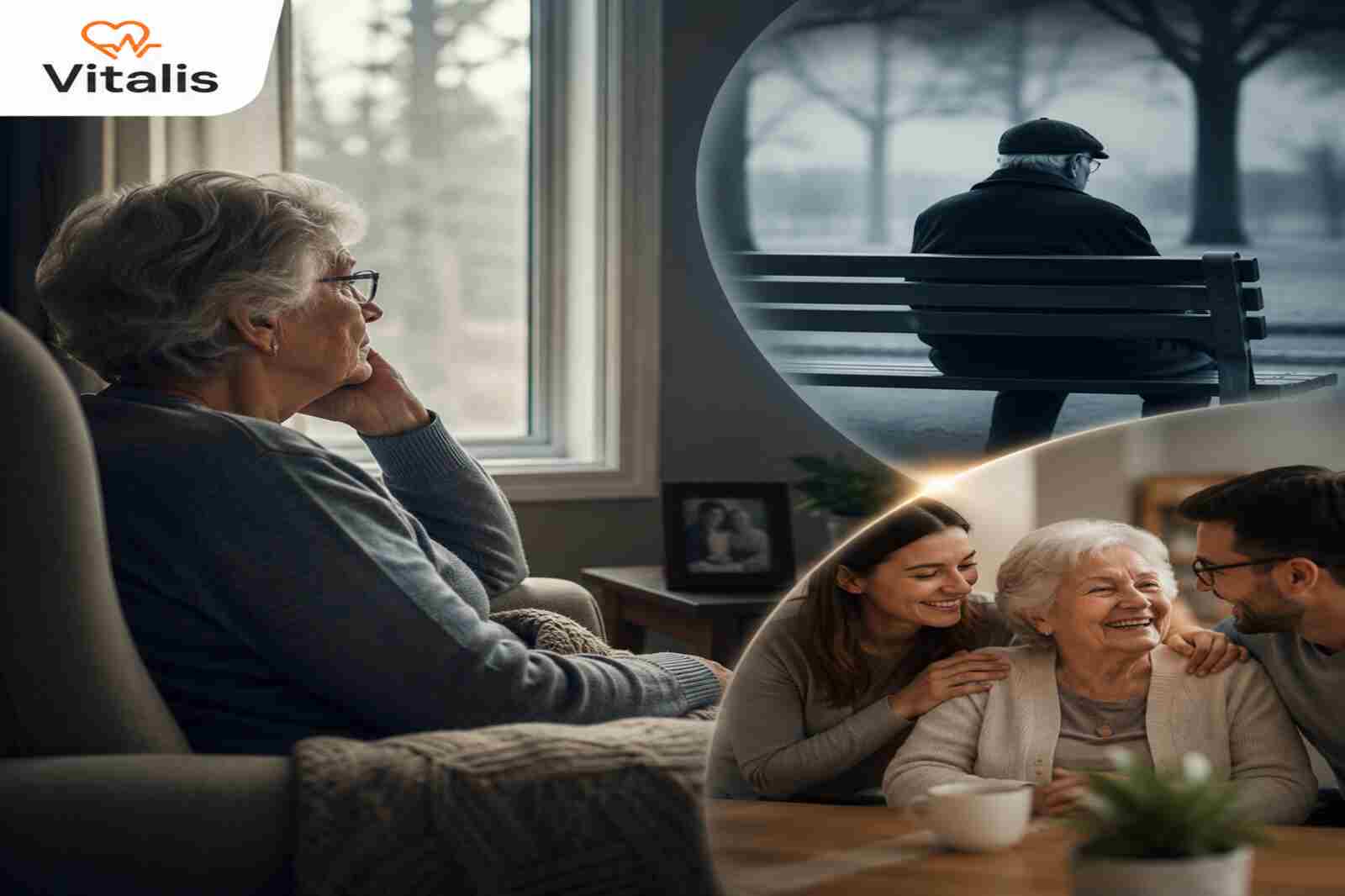
Loneliness is the feeling of being disconnected from others. Social isolation is the actual lack of contact with people. A senior can live with family and still feel lonely, or live alone and feel content. Both conditions matter because they quietly affect physical and mental health over time.
Why This Is a Growing Concern
Families are more spread out than ever. Adult children often live in different cities, seniors drive less as they age, and chronic illness or hearing loss can make socializing harder. These shifts have made social isolation seniors mental health a priority for public health experts nationwide.
Signs to Watch For
- Withdrawing from calls, texts, or visits
- Skipping meals or losing interest in cooking
- Sleeping too much or too little
- Neglecting hygiene or household tasks
- Increased confusion or memory lapses
The Health Risks of Loneliness in Older Adults
Chronic loneliness isn’t just an emotional issue. Research shows it’s tied to:
- Higher risk of dementia and faster cognitive decline
- Heart disease and high blood pressure
- Weakened immune function
- Depression and anxiety
- Premature death, at a rate comparable to smoking or obesity
How to Help a Lonely Aging Parent
- Schedule regular calls or visits, even short ones
- Encourage a hobby, faith group, or senior center activity
- Ask about their day, not just their health
- Look into local transportation options
- Consider a remote monitoring device that also supports connection
How Technology Is Changing Senior Care
Wearable devices and remote monitoring tools now do more than track falls. Many include check-in features, activity reminders, and easy one-touch communication, helping seniors feel supported without feeling watched.
How Vitalis Helps
Vitalis PHA combines medical alert systems with remote patient monitoring and AI-based tracking. Our wearable devices offer:
- Faster response times during emergencies
- Continuous monitoring of activity and wellbeing
- Early detection of changes that may signal isolation or decline
- Improved outcomes through regular family and caregiver check-ins
This means fewer silent days at home and more peace of mind for families.
FAQs
Is loneliness really a health risk?
Yes. Studies link chronic loneliness to higher rates of heart disease, dementia, and early death.
How do I know if my parent is isolated, not just introverted?
Look for changes: withdrawing from activities they once enjoyed, skipping meals, or avoiding contact they used to welcome.
Can technology really reduce loneliness?
It can help. Devices that combine safety monitoring with easy communication give seniors more reasons and more ways to stay connected.
“Social isolation and loneliness are serious yet underappreciated public health risks” for older adults.
— National Institute on Aging
Take the First Step
Loneliness in older adults is common, but it isn’t something families have to face without support. Recognizing the signs early and building small, consistent connections can protect both mental and physical health.
Take control of your family’s health today. Schedule a consultation with Vitalis and get personalized monitoring support.
Suggested Reads:
- The Future of Remote Patient Monitoring
- Recognizing Early Signs of Cognitive Decline
- How Medical Alert Systems Give Families Peace of Mind
Internal & External Sources
- Internal: Vitalis PHA Sitemap
- Suggested Reads Source: Vitalis PHA Post Sitemap
- External: CDC – Loneliness and Social Isolation
- External: National Institute on Aging – Social Isolation, Loneliness in Older People
This content is for informational purposes only and does not replace professional medical advice, diagnosis, or treatment. Always consult a qualified healthcare provider for personalized medical guidance.