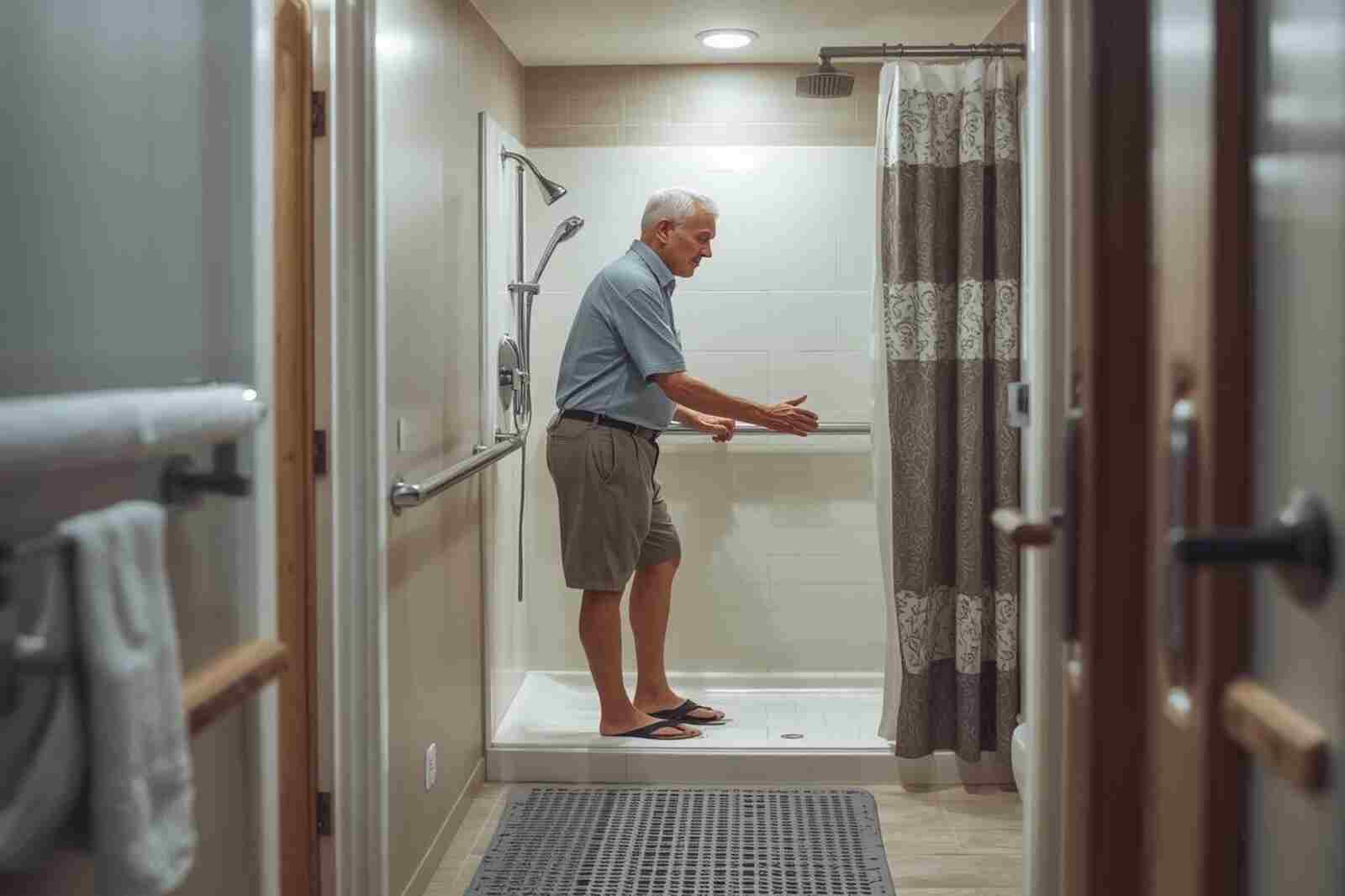
Bathrooms are one of the most common places where seniors experience falls and injuries. Slippery surfaces, tight spaces, and hard fixtures create a high-risk environment, especially for individuals with balance issues, reduced strength, or limited mobility.
The good news is that many bathroom-related falls are preventable with practical safety upgrades, daily-use habits, and a reliable emergency response plan. This guide outlines clear, actionable steps to improve bathroom safety for seniors, while also explaining how medical alert systems like the Vitalis Medical Alert Watch provide an essential backup when accidents happen.
Why Bathrooms Are High-Risk Zones for Seniors
Bathrooms combine several risk factors in a small, enclosed space, making them especially hazardous for older adults. Wet floors and constant moisture significantly increase the risk of slipping, while smooth tile or porcelain surfaces provide minimal traction, even for those who are otherwise steady on their feet.
The presence of hard fixtures such as toilets, sinks, bathtubs, and shower walls increases the likelihood of serious injury if a fall occurs, as there are few soft or forgiving surfaces to break the impact.
In addition, limited space and narrow layouts make it difficult to regain balance or safely brace oneself during a sudden loss of stability. As a result, bathrooms are consistently identified as one of the most common locations for fall-related injuries among older adults, particularly during bathing and toileting activities, when movement, water, and physical strain overlap.
Recognizing how these environmental factors interact is essential because effective fall prevention begins with reducing risk at its source, especially in the areas where falls are most likely to happen.
Top Safety Upgrades to Prevent Senior Falls
Physical modifications are one of the most effective ways to reduce bathroom-related injuries. These upgrades focus on stability, traction, and ease of movement.
Grab bars
- Install grab bars near toilets, inside showers, and along bathtub walls
- Bars should be securely anchored into wall studs—not suction-based for primary support
- Recommended by occupational therapists for balance assistance
Non-slip mats and flooring
- Use non-slip mats inside and outside the shower or tub
- Avoid loose rugs that can bunch or slide
- Consider textured flooring if remodeling
Raised toilet seats
- Reduce strain on knees and hips
- Make sitting and standing safer and more controlled
- Particularly helpful for seniors with arthritis or mobility limitations
Shower chairs or transfer benches
- Allow seated bathing, reducing fatigue and fall risk
- Improve stability for individuals with balance issues
- Often recommended after surgery or during recovery
These upgrades significantly lower the risk of falls without compromising independence, allowing seniors to continue managing daily routines with greater confidence. By reducing physical strain and improving stability, they help preserve autonomy while creating a safer bathroom environment.
Best Practices for Daily Bathroom Use
Even with safety equipment in place, daily habits play a critical role in preventing accidents. Consistent, mindful routines help reduce moment-to-moment risks that often lead to bathroom falls.
Improve lighting
Ensure bright, even lighting throughout the bathroom, with special attention to nighttime use when visibility is reduced. Motion-activated night lights or illuminated pathways can guide safe movement without the need to search for switches in the dark.
Keep floors dry
Moisture dramatically increases slip risk. Wipe up water immediately after bathing or handwashing, and use absorbent, non-slip mats specifically designed for wet environments to maintain traction around sinks, showers, and tubs.
Keep essentials within reach
Store soap, shampoo, towels, and personal care items at waist level to avoid bending, stretching, or reaching while standing on wet or slippery surfaces. Minimizing unnecessary movement helps maintain balance during daily routines.
Wear proper footwear
Non-slip shoes, shower sandals, or rubber-soled slippers provide essential traction on tile floors. Avoid socks or bare feet, which offer little grip and increase the likelihood of slipping.
Together, these small but consistent adjustments significantly reduce preventable risks during everyday bathroom use and reinforce overall fall prevention efforts.
Technology Solutions That Enhance Bathroom Safety
In addition to physical modifications, technology can further support senior fall prevention by reducing environmental hazards and helping seniors navigate the bathroom more safely and confidently.
When used appropriately, these tools add an extra layer of protection without increasing complexity.
Anti-slip aids
Adhesive tub strips, textured coatings, or slip-resistant decals improve traction on shower and bathtub surfaces where falls are most likely to occur.
These solutions are typically long-lasting, require minimal maintenance, and can be applied without major renovations, making them a practical option for both homeowners and renters.
Water-temperature regulators
Anti-scald valves and thermostatic mixing valves prevent sudden spikes in water temperature, which can cause burns or startle reactions. Sudden discomfort often leads to abrupt movements that increase fall risk, especially in wet environments.
By maintaining a consistent, safe water temperature, these devices reduce both burn injuries and secondary fall hazards.
Smart home features
For seniors comfortable with technology, smart home features can enhance bathroom safety. Voice-activated lighting eliminates the need to move in the dark, automated temperature controls reduce manual adjustments, and emergency call integrations provide quick access to help if something goes wrong.
These features are particularly useful for individuals with limited mobility or visual impairments.
While these technologies offer meaningful benefits, they should complement, not replace, foundational safety measures such as grab bars, non-slip flooring, and safe daily habits.
The most effective bathroom safety plans combine practical design, consistent routines, and supportive technology working together.
Prepare for the Unexpected: What If a Fall Happens?
Even the safest bathroom cannot eliminate all risk, especially as balance, strength, and reaction time change with age. When a fall does occur, the speed of response becomes the most critical factor in determining outcomes.
Being unable to get up or call for help can turn a manageable incident into a serious medical emergency. Delayed assistance significantly increases the risk of complications such as dehydration or hypothermia, particularly if a person remains on a cold bathroom floor for an extended period.
Prolonged immobility can also lead to pressure injuries and muscle breakdown, while fear and physical trauma after a fall often contribute to long-term mobility decline and loss of confidence.
The National Institute on Aging emphasizes that rapid response after a fall can reduce injury severity, shorten recovery time, and help seniors maintain independence.
For this reason, every senior bathroom safety plan should include a clear, reliable emergency response strategy, ensuring that help is available immediately, even when a phone is out of reach or the individual cannot move.
How the Vitalis Medical Alert Watch Helps During Bathroom Emergencies
Medical alert systems provide a critical safety net when physical modifications and daily precautions are not enough.
One-touch emergency assistance
- A clearly marked help button connects the user directly to professional monitoring support
- Works even if the senior cannot reach a phone
Optional advanced fall detection
- Automatically detects significant falls
- Sends alerts even if the user is unable to press the button
Wearable and waterproof design
- Designed for daily wear, including bathroom use
- Reduces the risk of being unreachable during high-risk activities like showering
Unlike stationary systems, a wearable solution ensures protection in the bathroom, where falls are most likely to occur. Importantly, medical alert systems do not replace caregivers or medical care.
They reduce response time, which research consistently links to better recovery outcomes after falls.
Safety First, Backup Always
Improving bathroom safety for seniors requires a layered, proactive approach rather than reliance on a single solution. No single measure can fully eliminate risk, but combining multiple strategies creates a safer, more supportive environment.
Practical home upgrades such as grab bars, non-slip flooring, and shower seating reduce physical hazards and provide stability during high-risk movements. Safer daily habits, including proper lighting, dry floors, and accessible essentials, help minimize moment-to-moment risks that often lead to slips or loss of balance.
Technology that supports rapid emergency response, such as medical alert systems, ensures that if a fall does occur, help is available without delay. By addressing environmental risks while also preparing for the unexpected, families can significantly reduce fall-related injuries.
This layered approach not only improves physical safety but also preserves independence, confidence, and dignity, allowing seniors to navigate daily routines with greater peace of mind.
See our recommended bathroom safety checklist and learn how the Vitalis Medical Alert Watch adds peace of mind where it matters most.