Every fall, Utah’s leaves change color, temperatures drop, and mornings get icy. For older adults, that season shift brings a quieter danger: a sharp rise in fall risk. Falls are already the leading cause of injury death for Utahns aged 65 and older, and the state’s oldest, most rural counties carry a disproportionate share of that burden. In this piece, we mapped where Utah’s aging population is most concentrated, layered in the state’s fall injury data, and built an interactive tool so you can see exactly where your county stands. You’ll learn which counties face the highest exposure, why rural Utah is especially vulnerable, and what seniors and families can do about it today.
What Is Utah’s Fall Risk Landscape?
Fall risk isn’t the same everywhere in Utah. It depends on how many older residents live in an area, how far they live from a hospital or trauma center, and how much home and community support is available. The Utah Department of Health and Human Services tracks fall-related hospitalizations and deaths statewide, and the pattern is clear: falls are a leading cause of injury death for Utahns, especially those aged 65 and older. Unintentional fall-related inpatient hospital charges in Utah topped $1.9 billion between 2016 and 2022 alone.
Why does this matter for a county-by-county view? Because Utah’s 65-and-older population isn’t spread evenly. Some counties, especially in rural southern and eastern Utah, already have a much older population than the Wasatch Front. As that population continues to age, fall risk becomes a bigger local health issue, not just a statewide statistic.
Symptoms and Warning Signs to Watch For
Falls rarely happen without warning. Family members and caregivers can watch for:
- Unsteadiness or a wobbly walk, even over short distances
- Holding onto furniture or walls while moving around the house
- Dizziness when standing up too quickly
- Frequent “close calls” or near-trips
- New bruises the person can’t explain
- A growing fear of falling, which often causes seniors to move less and lose strength
Any of these signs is a good reason to talk with a doctor before winter weather adds ice and slick sidewalks to the mix.
Causes and Risk Factors Behind Utah’s County-Level Gaps
Fall risk builds up from several overlapping factors:
- Age itself. Unintentional fall injury hospitalization rates rise the older a person gets, according to Utah Department of Health and Human Services data.
- Rural isolation. Counties with fewer hospitals and longer ambulance response times give falls more time to become emergencies.
- Living alone. Seniors without a spouse, roommate, or nearby family often go unnoticed for hours after a fall.
- Home hazards. Loose rugs, poor lighting, and stairs without rails are common triggers.
- Medication side effects. Blood pressure medications and sedatives can cause dizziness.
- Weather. Utah’s fall and winter ice adds an extra layer of risk statewide.
Where Utah’s Aging Population Is Concentrated
Using the most recent county age estimates from the U.S. Census Bureau and Kem C. Gardner Policy Institute, eight Utah counties now have at least one in five residents aged 65 or older: Piute (29.3%), Daggett (26.5%), Garfield (24.0%), Kane (23.6%), Wayne (23.1%), Washington (22.4%), Grand (20.6%), and Rich (20.5%). By contrast, Utah County (8.0%) and Tooele County (9.4%) have Utah’s youngest populations. Salt Lake County, home to Vitalis’s Riverton headquarters, sits closer to the state average at 12.1%.
This gap matters because rural, older counties combine two risk multipliers at once: a larger share of residents in the highest-risk age bracket, and fewer nearby medical resources if a fall does happen. Use the interactive Utah county map below to click through all 29 counties, see each one’s senior population share, and check which local health district covers your area.
How Doctors and Public Health Teams Identify Risk
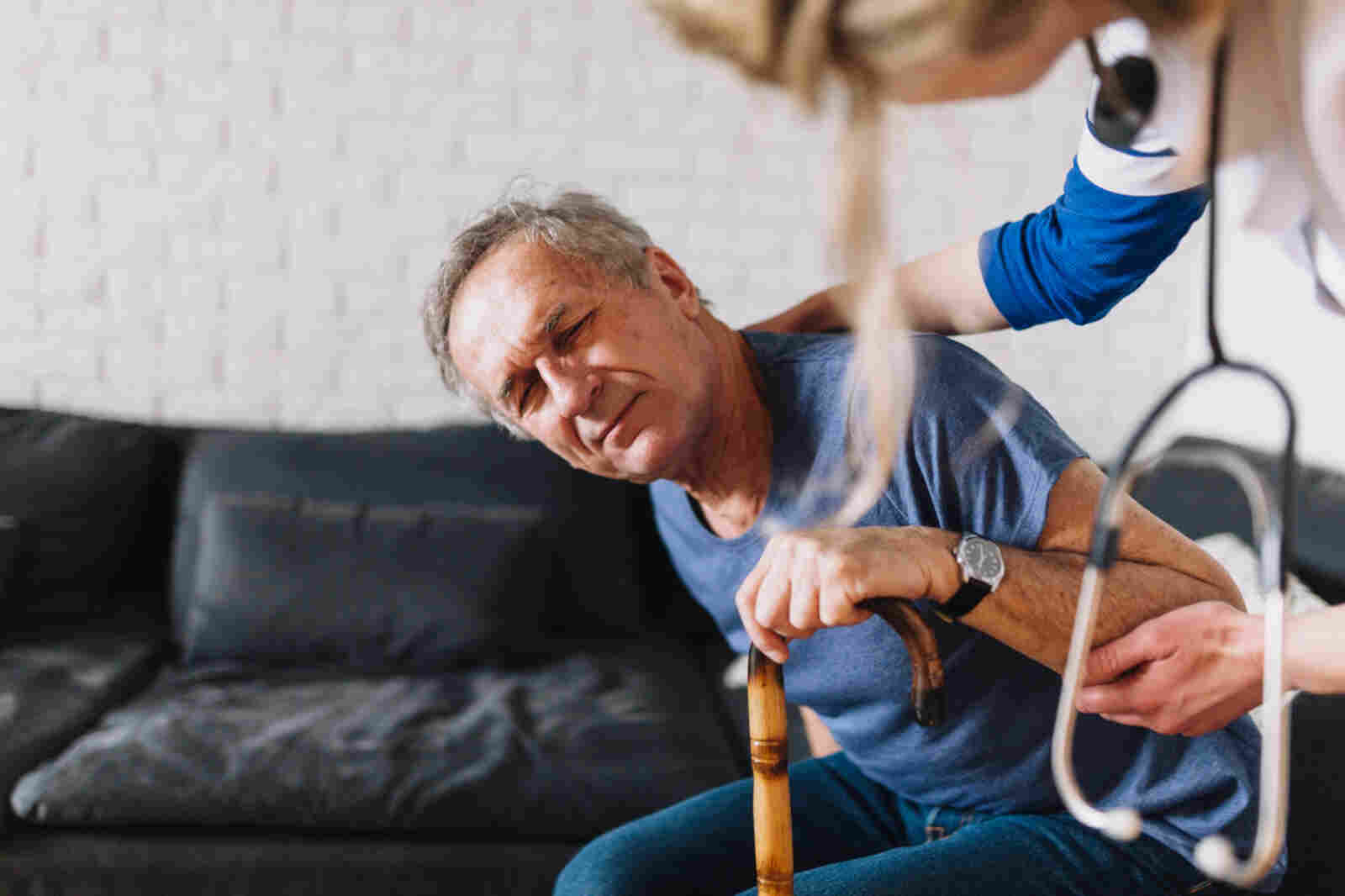
Diagnosis starts with a conversation, not just an X-ray. A doctor may ask about recent falls, check balance and grip strength, and review medications for side effects that affect coordination. Simple in-office tests, like timing how long it takes someone to stand up, walk a short distance, and sit back down, help flag risk early. Public health researchers use a similar approach at the population level. A peer-reviewed CDC study of Salt Lake County mapped fall-related EMS calls down to the census tract level. It found the heaviest fall burden clustered in southeast and southwest Salt Lake County, concentrated around mixed-level senior living residences. That kind of granular mapping is exactly what makes prevention programs effective, whether it’s applied to a neighborhood or a whole county.
Treatment Options
Recovery and prevention usually combine a few approaches:
- Medication review. Adjusting or reducing drugs that cause dizziness
- Physical therapy. Rebuilding strength, balance, and confidence
- Vision and hearing checks. Correcting sensory issues that affect balance
- Home modifications. Grab bars, non-slip mats, and better lighting
- Monitoring solutions. Wearable devices that detect a fall and call for help automatically
Preventive Care: Daily Habits That Help
- Do balance and strength exercises a few times a week
- Wear supportive, non-slip shoes, even indoors
- Keep walkways, stairs, and entryways clear and well lit
- Schedule an annual medication review with a doctor or pharmacist
- Get vision checked every year
- Ask a doctor about vitamin D and bone health
How Technology Is Changing Fall Care
Technology is closing the gap between “a fall happened” and “help arrived.” Instead of waiting for a scheduled check-in or hoping a neighbor notices, connected devices can flag a fall the moment it occurs. This matters most in the exact counties where the population is oldest and help is furthest away.
How Vitalis Helps
Vitalis PHA combines medical alert systems, remote patient monitoring, and AI-based tracking into one proactive care approach:
- Faster response times. Automatic fall detection means help gets called even if a senior can’t press a button.
- Continuous monitoring. Wearable devices track activity patterns around the clock, not just during office visits.
- Early detection benefits. Subtle changes in movement or vital signs can flag rising fall risk before a fall happens.
- Improved patient outcomes. Faster response after a fall is directly linked to better recovery.
Whether a senior lives in urban Salt Lake City or a rural county near St. George hours from the nearest hospital, the same principle applies: the sooner help arrives, the better the outcome. That’s why Vitalis offers a free fall risk screening to help families understand exactly where their loved one stands, and automatic fall detection devices built to close that response-time gap.
What the Research Says
Two findings anchor this map. The CDC’s Older Adult Fall Prevention Program confirms that falls are the leading cause of both injury and injury-related death among Americans 65 and older, and the national fall death rate has been climbing for years. Closer to home, researchers who tracked EMS calls in Salt Lake County found that most high-burden falls happened in and around mixed-level senior living residences, not random accidents on the street. Together, these findings point to the same conclusion: fall risk is predictable, trackable, and preventable when communities have the right data and the right response tools.
Frequently Asked Questions
Why do fall injury rates go up so much with age? Bones become more brittle, reflexes slow down, and balance-related muscles weaken with age. Even a small stumble can turn into a serious injury for someone in their 80s.
Is fall risk really different depending on where you live in Utah? Yes. Counties with an older population and fewer nearby medical resources face a higher combined risk, even before accounting for individual health factors.
What’s the single most effective way to prevent a fall? Strength and balance exercises, done consistently, are one of the most well-supported prevention tools. Pairing that with a home safety check and a wearable alert device covers both prevention and response.
Does a medical alert system actually make a difference after a fall? Yes. Faster response after a fall reduces complications and supports better recovery, especially for injuries like hip fractures where time matters.
How do I know if my parent or loved one is at high risk? A short, free fall risk screening can help identify red flags like unsteady walking, medication side effects, or home hazards before a fall happens.
The Bottom Line
Fall risk in Utah isn’t random. It clusters in counties with older populations and thinner access to care, and it rises every autumn as daylight shortens and sidewalks ice over. The good news is that most falls are preventable with the right combination of strength, home safety, and fast response when something does go wrong.
Take control of your family’s health today. Schedule a consultation with Vitalis and get personalized monitoring support built for wherever in Utah you call home.
Suggested Reads
- Fall Prevention for Seniors: The Complete Guide
- Senior Bathroom Safety Tips to Prevent Falls and Injuries
- Senior Strength Training for Fall Prevention
This content is for informational purposes only and does not replace professional medical advice, diagnosis, or treatment. Always consult a qualified healthcare provider for personalized medical guidance.
Sources: Utah Department of Health and Human Services (IBIS-PH); U.S. Census Bureau & Kem C. Gardner Policy Institute, Vintage 2022 County Population Estimates; Centers for Disease Control and Prevention, Preventing Chronic Disease (Byun & Robertson, 2019); Centers for Disease Control and Prevention, Older Adult Fall Prevention Program.